


Alina TEODORESCU
European carbon prices rise for fourth consecutive week as gas prices climb
Rising gas prices provide short-term support for EUAs through stronger coal generation
14 septembrie 2026
The European carbon market delivered another strong performance last week, extending its recent bullish run as prices maintained upward momentum through most of the period. The rally only lost steam at the very end of the week, when EUAs came under pressure from softer gas and oil prices.
The Dec’26 contract briefly climbed to €86.66 during Friday morning’s session, reaching its highest level in almost eight weeks, before giving back those gains later in the day. The benchmark contract ultimately closed Friday €0.30 lower, as weakness across the wider energy complex weighed on carbon prices.
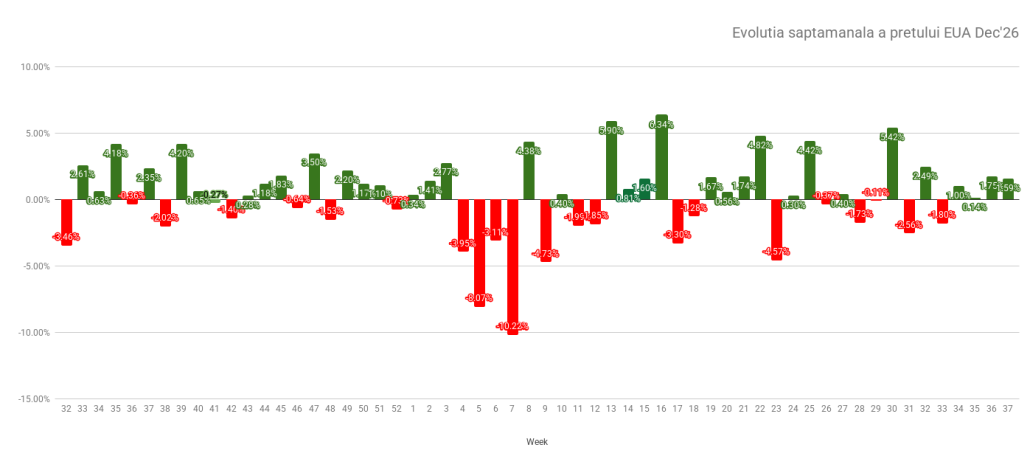
The late pullback brought an end to a five-session winning streak for EUAs. Nevertheless, the benchmark contract still finished the week 1.59% above the previous Friday’s close, marking a fourth consecutive week of gains.
Trading activity picked up slightly last week, with 108.3 million allowances changing hands, up from the previous week and significantly above the levels recorded in August. The increase suggests that traders have gradually returned to the market following the summer holiday period. However, volumes remained below this year’s weekly average, pointing to continued caution among market participants.
The upward trend in the carbon market was likely supported by higher gas prices, as the geopolitical backdrop continued to deteriorate. The TTF front-month contract jumped 10.5% last week amid attacks on Saudi Arabian energy infrastructure and continued to move higher in early trading on Monday.
“A meeting between Gulf states, scheduled for today, was postponed due to a lack of consensus. The delay pushes any prospect of de-escalation even further out of reach,” analysts at ING said this morning.
Higher gas prices tend to have a bullish impact on carbon prices in the short term, as they improve the relative competitiveness of coal-fired generation and, in turn, increase demand for emission allowances. Over the longer term, however, persistently elevated energy prices could weaken the macroeconomic outlook and increase the likelihood of political intervention, particularly as concerns over European industrial competitiveness intensify.

