

Alina TEODORESCU
Carbon Allowance Prices Have Historically Risen During FIFA World Cups
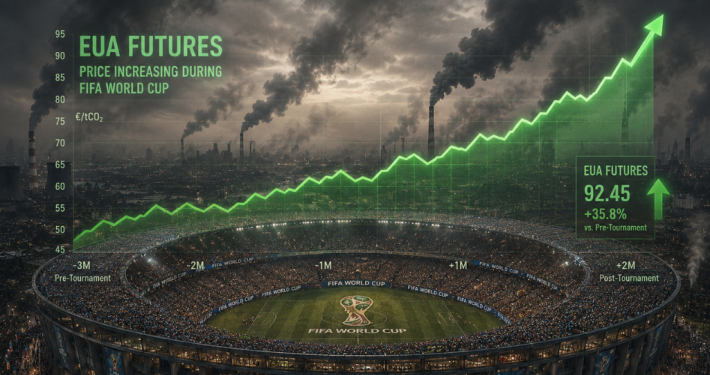
BBVA analysts say EU carbon prices have posted an average gain of 7.47% during previous tournaments.
15 June 2026
While most climate-related coverage of the FIFA World Cup centers on the tournament’s carbon footprint, BBVA analysts have highlighted a lesser-known trend in the European carbon market that has emerged during past competitions.
“EU carbon allowance prices have historically risen during World Cup tournaments, with gains averaging 7.47% across previous editions,” BBVA analysts said in a weekly report to clients, adding that the competition “is likely to provide plenty of drama and distraction.”
BBVA’s analysis shows that EU carbon allowances (EUAs) recorded gains during four of the last five FIFA World Cups. During the 2006 tournament in Germany, EUA prices rose by roughly 15%, while the 2010 World Cup in South Africa was the lone exception, with prices falling around 5%. The market returned to positive territory during Brazil 2014, with gains of nearly 7%, followed by an increase of about 5% during Russia 2018. The strongest performance came during Qatar 2022, when EUA prices climbed by more than 15% over the course of the tournament.
Taken together, the five tournaments delivered an average gain of 7.47%, according to BBVA’s calculations. While the recurring pattern is difficult to ignore, the drivers behind it are less clear. Each edition took place against a distinct economic and regulatory backdrop, ranging from the aftermath of the global financial crisis in 2010 to the energy crisis and supply concerns that shaped the market in 2022.
Market participants may point to a variety of factors, including seasonal trading dynamics. World Cups are held during periods when many traders are on holiday or preparing for summer breaks, often resulting in thinner trading volumes and reduced liquidity. In such conditions, relatively small buying or selling flows can have a larger impact on prices than they would in a more active market.
Whatever the explanation, the World Cup effect identified by BBVA offers an intriguing football-themed perspective on carbon market performance. As attention turns to the action on the pitch, EU carbon prices have historically shown a tendency to keep pace with the tournament’s winning streaks.

